Banking
How to open a UAE business bank account as a foreigner in 2026
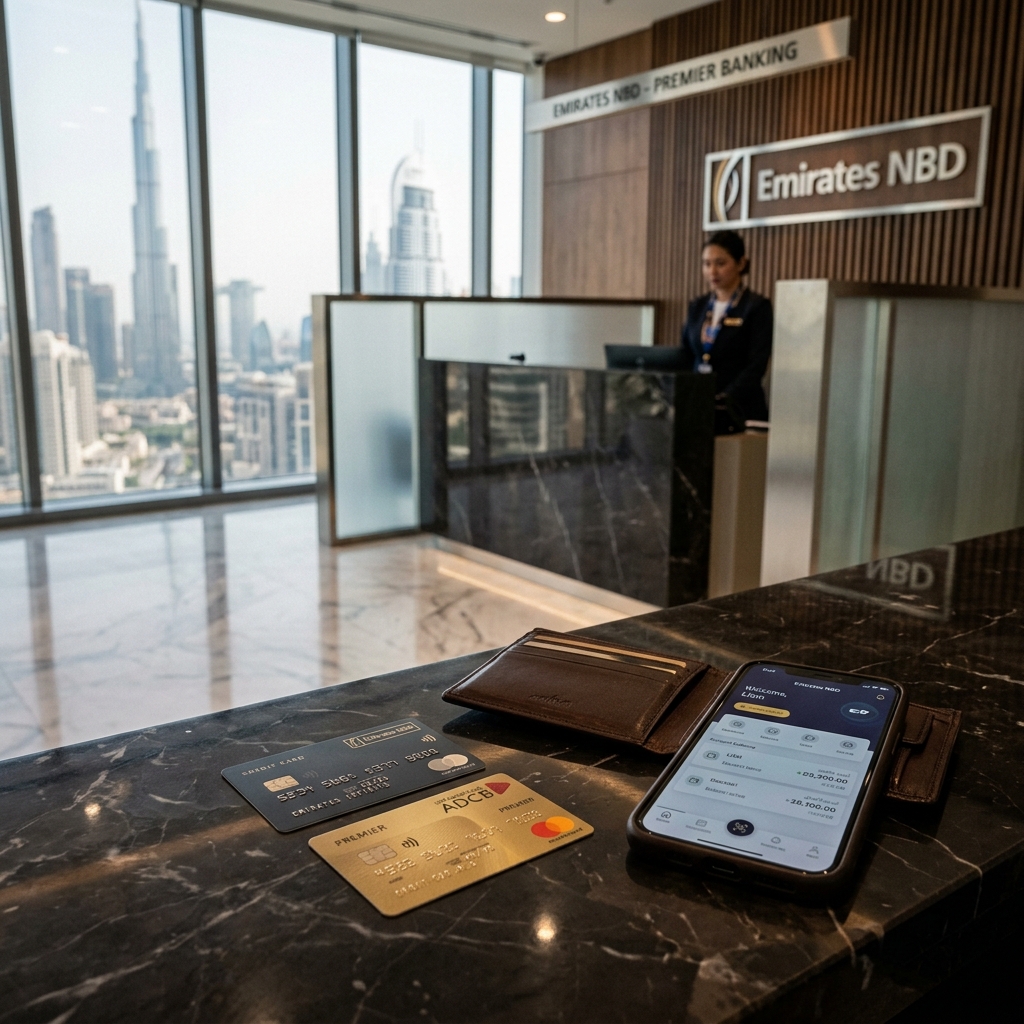
UAE banking is not harder than any other mature financial centre — but it's different. Rigorous compliance, detailed KYC and careful reputational filtering. Those who arrive prepared open in 4 to 8 weeks. Those who improvise spend 6 months and still may not succeed. Here is how it works.
Account types in the UAE
- Corporate account — in the company's name. Available after licence issuance + Emirates ID of the director.
- Resident personal account — in your individual name, after Emirates ID issuance.
- Non-resident account — some banks offer it, with very restrictive requirements and higher fees. Typically only for private banking clients above USD 250k balance.
Recommended banks
The banks with the best experience for international entrepreneurs:
- Emirates NBD — UAE's largest bank; excellent for companies with relevant operational volume and long-term relationship.
- Mashreq Bank — Mashreq NEOBiz offers one of the fastest fully-digital onboarding experiences for SME Free Zone clients.
- ADCB (Abu Dhabi Commercial Bank) — strong corporate services with a solid online platform.
- RAKBANK — good relationship with Free Zones, especially RAK and RAKEZ.
- WIO Bank — 100% digital bank, agile for startups and solo founders.
- HSBC UAE — for profiles with already established international operations (relevant minimum balances).
Required documents
For a corporate account:
- Trade Licence
- Memorandum and Articles of Association (MoA / AoA)
- Certificate of Incorporation / Establishment Card
- Board resolution authorising the opening
- Passport and Emirates ID of shareholders and directors
- UAE proof of address (Ejari or rental contract)
- Proof of address in country of origin
- CV / professional profile of UBOs
- Bank statements from the last 6 months (personal and/or previous company)
- Contracts with main customers or suppliers
- Business plan / business model summary
- Source of funds and source of wealth — documented declaration
What separates an approved dossier from a rejected one
The difference is rarely the activity. It is the quality of source-of-funds documentation and the clarity of the narrative linking your professional history to the business you are opening. A bank doesn't reject because it is suspicious — but because it does not have enough information to approve under compliance.
The process, week by week
- Week 1–2: Pre-screening. We present the preliminary dossier to selected bank(s) and receive an eligibility indication.
- Week 2–3: KYC meeting (video call or in person). You are interviewed by a Relationship Manager.
- Week 3–5: Formal submission and compliance analysis. The bank runs automatic checks (PEP, sanctions, AML) and manual ones.
- Week 5–7: Approval and opening. IBAN is issued, debit card sent, online banking activated.
- Week 7–8: First deposit + operational setup (Wise/Revolut linked, payment gateways, etc.).
The 5 most common rejection reasons
- Weak source of funds — inability to document where the initial capital came from.
- Declared activity inconsistent with the shareholder's professional profile.
- 100% crypto-related operation without Crypto Asset Service Provider registration — some banks reject by policy.
- UAE residential address not confirmed (Ejari) — banks require local address.
- Incomplete tax history — overdue declarations in country of origin raise flags.
Why our approval rate is 98%
It is not because of privileged contacts — it is process. Before submitting any application, we do an eligibility pre-analysis and identify gaps in the dossier. If there is a hole in the narrative, we fix it before the bank sees it. If bank A is not the best fit for your profile, we route to B or C.
It's 95% backstage work, 5% conversation at the counter.
Want to know your approval probability?
Free analysis of your profile in 24h. We tell you which banks have the highest probability — and how to prepare the dossier.
Start analysis